Disability affects millions of people in Viet Nam, making inclusion a critical topic for the country’s workforce. According to a national UNICEF survey, more than seven percent of the population aged two and above,around 6.2 million people,live with a disability, and an additional 13 percent (nearly 12 million) live in a household with a person with a disability. As Viet Nam’s population ages, these numbers are expected to rise.
Within the garment and footwear sector, where occupational safety and health (OSH) risks remain high, Better Work Viet Nam (BWV) supports factories in reducing workplace accidents and improving overall working conditions, while actively promoting equality and the inclusion of persons with disabilities across its programme activities.
Key findings from a Better Work Viet Nam survey
Earlier this year, BWV surveyed more than 100 participating factories to understand current awareness and policies around hiring persons with disabilities. The results show both progress and persistent challenges:
• 61.3% per cent of factories say brand requirements are a key motivation to hire persons with disabilities.
• 58 per cent report that workers with disabilities demonstrate high loyalty and lower turnover, making them a valuable long-term asset, enabling companies to significantly reduce costs associated with recruitment and retraining.
• 44.5 per cent cite the difficulty of finding qualified candidates as their main challenge.
As a result, many factories are instructing human resources teams to collaborate with disability-focused organizations to identify potential candidates, which is an encouraging step toward more inclusive recruitment.
Practical tools for more inclusive workplaces
To support factories in taking action, BWV has developed a practical, easy-to-understand handbook (Vietnamese version) on inclusive recruitment and workplace practices. Tailored specifically to garment and footwear factories, the handbook helps HR, supervisors and workers understand how to create enabling environments for employees with disabilities. In addition, the handbook has been distributed to participating factories and workers to support knowledge and awareness on the issue.
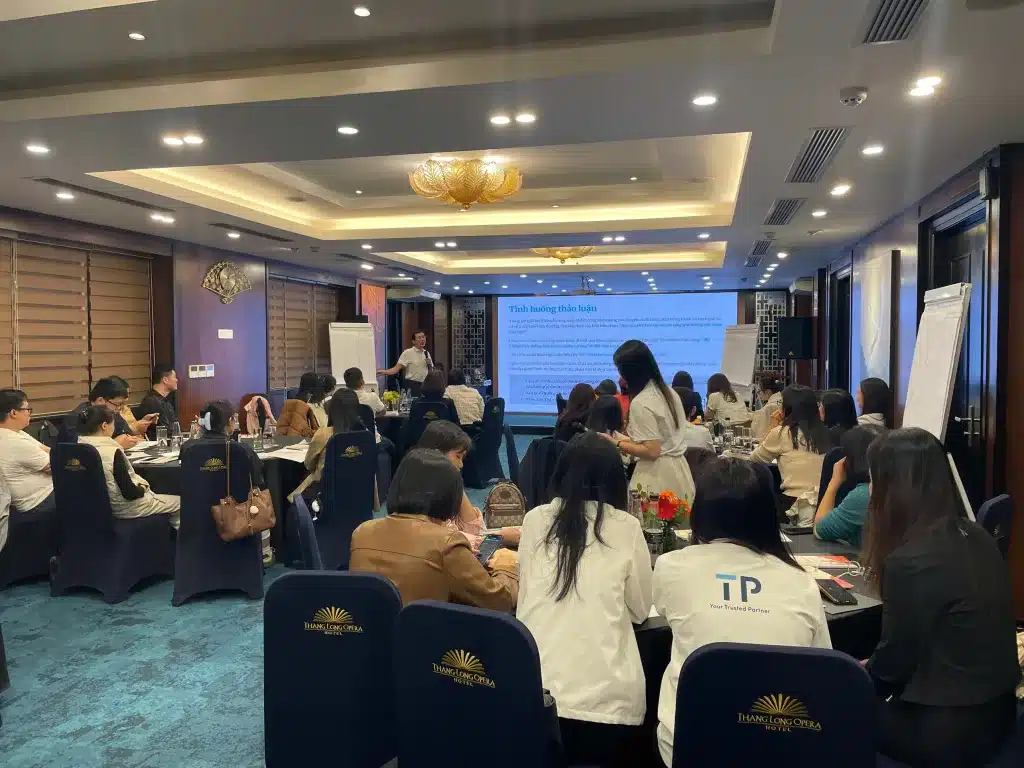
Better Work Viet Nam delivered three training sessions in Hanoi and Ho Chi Minh City on “Building an Inclusive Working Environment for Persons with Disabilities.” Nearly 100 participants – mainly HR, Compliance, and CSR staff participated, discussing stereotypes, reviewing their factories’ current policies, and working through group exercises to identify priority actions for improvement.
‘Everyone can shine when given the right position’
For Le Thi Ngoc Anh, Compliance Staff at Speed Motion Vietnam Co., Ltd., the training broadened her understanding of working with colleagues with disabilities:
“Our factory currently employs five people with physical disabilities, but this number is quite small. My goal was to gain a deeper understanding of the legal regulations concerning people with disabilities and to better understand their perspectives. This helps me to interact with them more proactively and openly at the factory.
The trainer’s lessons and the shared experiences from other factories were incredibly helpful in broadening my understanding of working with colleagues with disabilities. The most impactful part for me was the guest speaker’s story about a startup leather hospital model. I was truly moved to learn about products made 100% by hand by people with disabilities, how they overcame initial hardships and insecurities, and the powerful idea that ‘Everyone can shine when given the right position.’
After returning to the factory, Le Thi Ngoc Anh plans to propose that the leadership review and strengthen the company’s anti-discrimination policy and recruitment strategies to encourage more persons with disabilities to confidently apply for roles.

Why inclusion matters: legal, social and business reasons
In global supply chains, inclusion of persons with disabilities is an area of focus. Viet Nam’s 2010 Law on Persons with Disabilities and the 2019 Labour Code mandate non-discrimination and equal employment opportunities. Proactively implementing these standards ensures legal compliance and demonstrates a strong commitment to social responsibility, meeting new ESG standards required by key export markets like the EU, US, and Japan for the textile, garment, and footwear industries.
Better Work Viet Nam remains committed to supporting this transformation by equipping factories with the knowledge, tools and confidence to create workplaces where workers with and without disabilities can contribute and thrive.
These activities are part of the program activities implemented by Better Work and funded by the Australian Department of Foreign Affairs and Trade (DFAT).